Guide · inspection & testing
What an EICR actually is.
Inspection and testing gets sold with a lot of noise about safety and very little about what happens on the day. Here is the whole thing in plain English: what gets tested, how often it is needed, what the codes mean and what an unsatisfactory result really costs.
How often
Three different answers, depending on who you are.
Landlords
At least every 5 years
Privately rented homes in England must be inspected at least every five years, and at the start of a new tenancy if the existing report has expired. A copy goes to the tenant, and to the council if they ask for it.
Homeowners
Around every 10 years
Not a legal requirement, but the usual recommendation for an owner-occupied home — and worth doing when you buy, before a refurbishment, or if the consumer unit still has rewireable fuses in it.
Commercial premises
Typically every 5 years
Most commercial installations sit on a five-year cycle, but insurers, landlords and licensing conditions frequently ask for something shorter. Check what your policy says before booking, not after.
Those intervals are the general guidance for the UK — the right interval for a specific property can be shorter, and an EICR will tell you when the next one is due on the front of the report.
On the day
Four stages, half a day for most homes.
The power goes off for part of it — usually a couple of hours rather than the whole visit. If you work from home or run a shop, say so when you book and the isolations get planned around it.
01
Paperwork and a look round
What the installation is, how old it is, what has been altered and by whom. Previous certificates, if there are any, and the extent of what is being inspected — agreed with you in writing before anything is switched off.
02
Dead testing
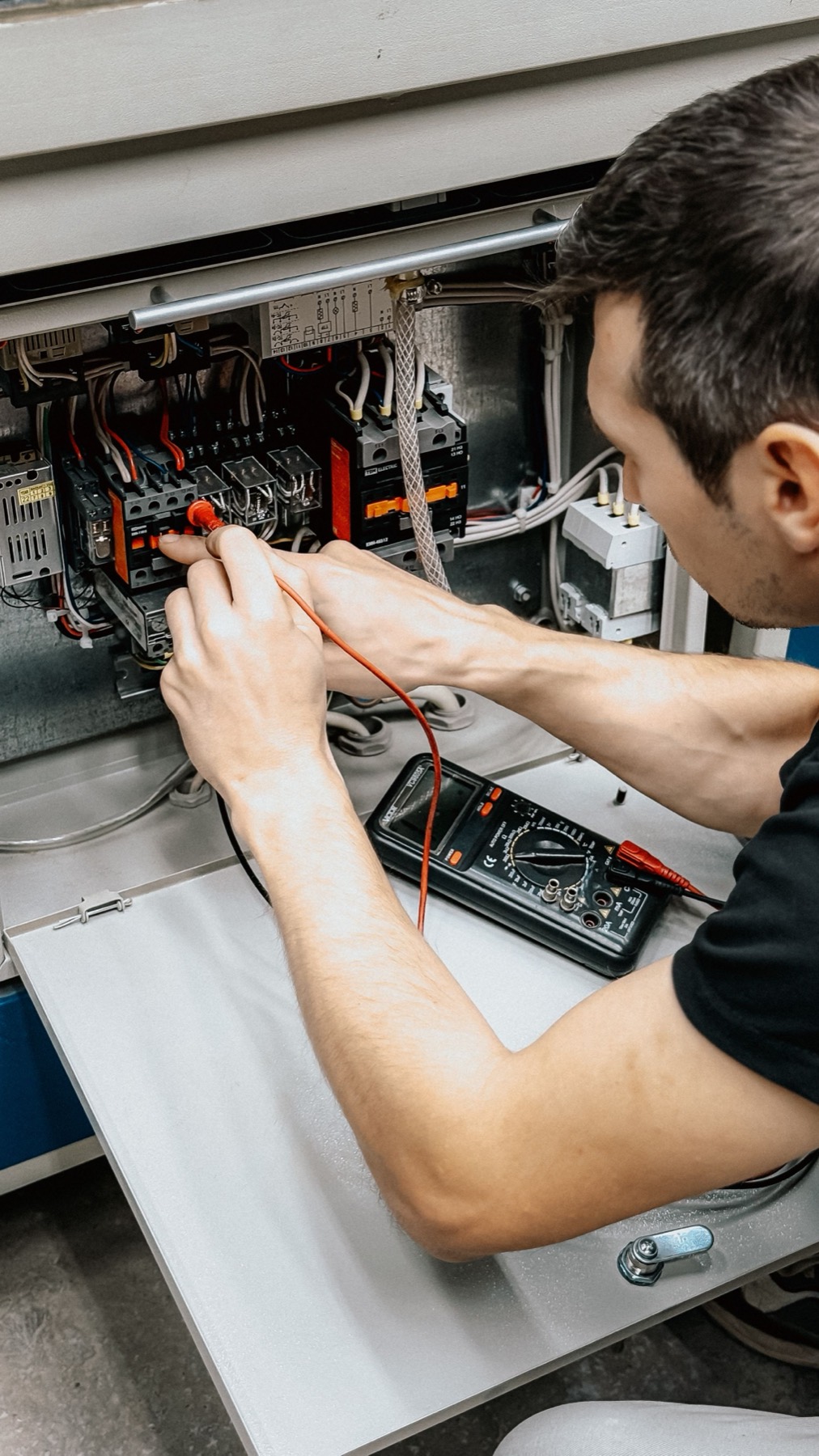
The supply is isolated for the part of the day that matters, and the installation is tested with the power off: continuity of conductors and protective bonding, insulation resistance, polarity. This is where most real problems are found.
03
Live testing
Power back on for earth fault loop impedance, RCD operating times and functional checks of the protective devices, so the circuits are proven to disconnect fast enough if something goes wrong.
04
The report
Observations written up and coded, an overall satisfactory or unsatisfactory outcome, and a conversation about what it means — what must be done, what is worth doing, and what can be left alone.
Reading the report
C1, C2, C3 and FI, without the scare tactics.
The codes are the whole report. Understand these four and you can tell in thirty seconds whether you are being told about a genuine problem or being sold a job.
- C1Danger present
- Risk of injury right now — exposed live parts, for example. It gets made safe on the visit, and you are told immediately rather than finding out from a report a week later.
- C2Potentially dangerous
- Not dangerous this second, but it will be given the wrong circumstances — no RCD protection on a socket circuit used outdoors, missing main bonding, a damaged accessory. C2 items make a report unsatisfactory and need putting right.
- C3Improvement recommended
- The installation is safe, but it would be better if this were different — usually because standards have moved on since it was installed. A C3 on its own does not fail a report and does not have to be actioned.
- FIFurther investigation
- Something was found that cannot be judged without digging further — a circuit that goes somewhere unidentified, for example. You are told what it would take to chase it down before any extra time is spent.
Need a report doing?
Homes, rentals and commercial premises across Solihull. Ring and say what the property is and what it is for — that is enough to get a price.